



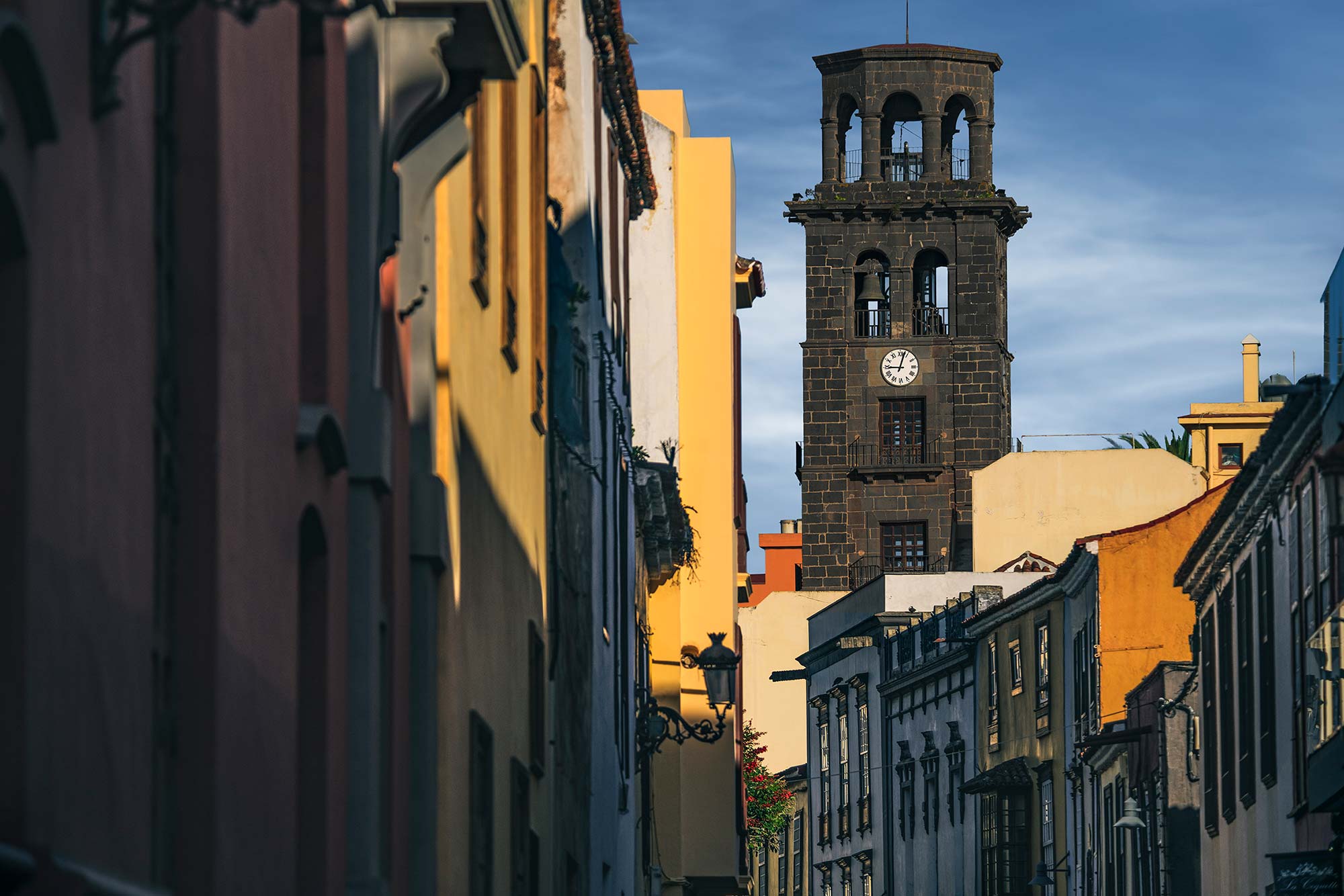
The municipality begins the participatory phase of research and diagnosis to develop the first Management Plan for the historic site
La Laguna begins this week the citizen participation process that will be fundamental in the development of the first Management Plan for the historic city, a strategic instrument that complements the Special Protection Plan (PEP) and will guide the conservation, planning, and sustainable development of the only urban ensemble in the Canary Islands declared a World Heritage Site, including its surrounding area. With this step, the municipality formally inaugurates a crucial undertaking that, beyond meeting the requirements established by UNESCO, aspires to define a model of a vibrant, livable city, not only aligned with contemporary demands but also capable of anticipating future challenges.
The participatory process, open to groups and institutions as well as any individual resident, marks the starting point of a decade of strategic planning. This week’s sessions will focus on research and diagnosis and will constitute the first phase of a broader process.
The mayor of La Laguna, Luis Yeray Gutiérrez, explains that “this Management Plan is probably the most important document the historic city of La Laguna has faced since its declaration as a World Heritage Site. It is not a mere formality; it is a tool that will contribute to guaranteeing the conservation of our Outstanding Universal Value and, at the same time, to planning a vibrant, livable city that is proud of its identity.”
Gutiérrez emphasizes that this participatory phase “is the first step in an important collective process that will strengthen our capacity to anticipate challenges, improve the quality of life, and position La Laguna at the level of international best practices. Ultimately, it will be a document that defines how we want to protect and experience our heritage in the coming decades: with balance, with participation, with vision, and with pride.”
For his part, the Councilor for Territorial Planning and Cultural Heritage, Adolfo Cordobés, emphasizes that the Management Plan “represents a profound change in the way we understand and manage our heritage, as we move from a vision focused solely on the physical to a comprehensive approach that incorporates mobility, lighting, risk management, the local economy, participation, and sustainability.”
Cordobés notes that the document “does not replace the Special Protection Plan (PEP), but rather complements and updates it conceptually, within a shared system that will allow us to rigorously address the current and future challenges of the only World Heritage City in the Canary Islands.”
Furthermore, the councilor points out that the document will be “a dynamic system, with indicators, monitoring mechanisms, and the capacity to adapt to a constantly changing society,” and that citizen participation “will not be a mere formality, but a structural pillar that will guarantee that citizens effectively influence the definition of the management model.”
The “Management Plan for the San Cristóbal de La Laguna World Heritage Site, Buffer Zone, and Surrounding Area” is structured around four main areas (strategic and operational, mobility and open space design, lighting, and participation and communication) that will allow for a comprehensive approach to the factors that determine the urban experience and heritage conservation.
This document will be key to addressing challenges such as tourism pressure, climate change, the risk of loss of identity, mobility in heritage environments, and the livability of public space, integrating criteria of sustainability, accessibility, and social cohesion. UNESCO’s contemporary vision, which conceives of heritage as a living ecosystem where architecture, community, identity, local economy, and urban landscape form an inseparable whole, will be the conceptual framework guiding the work in the coming years.
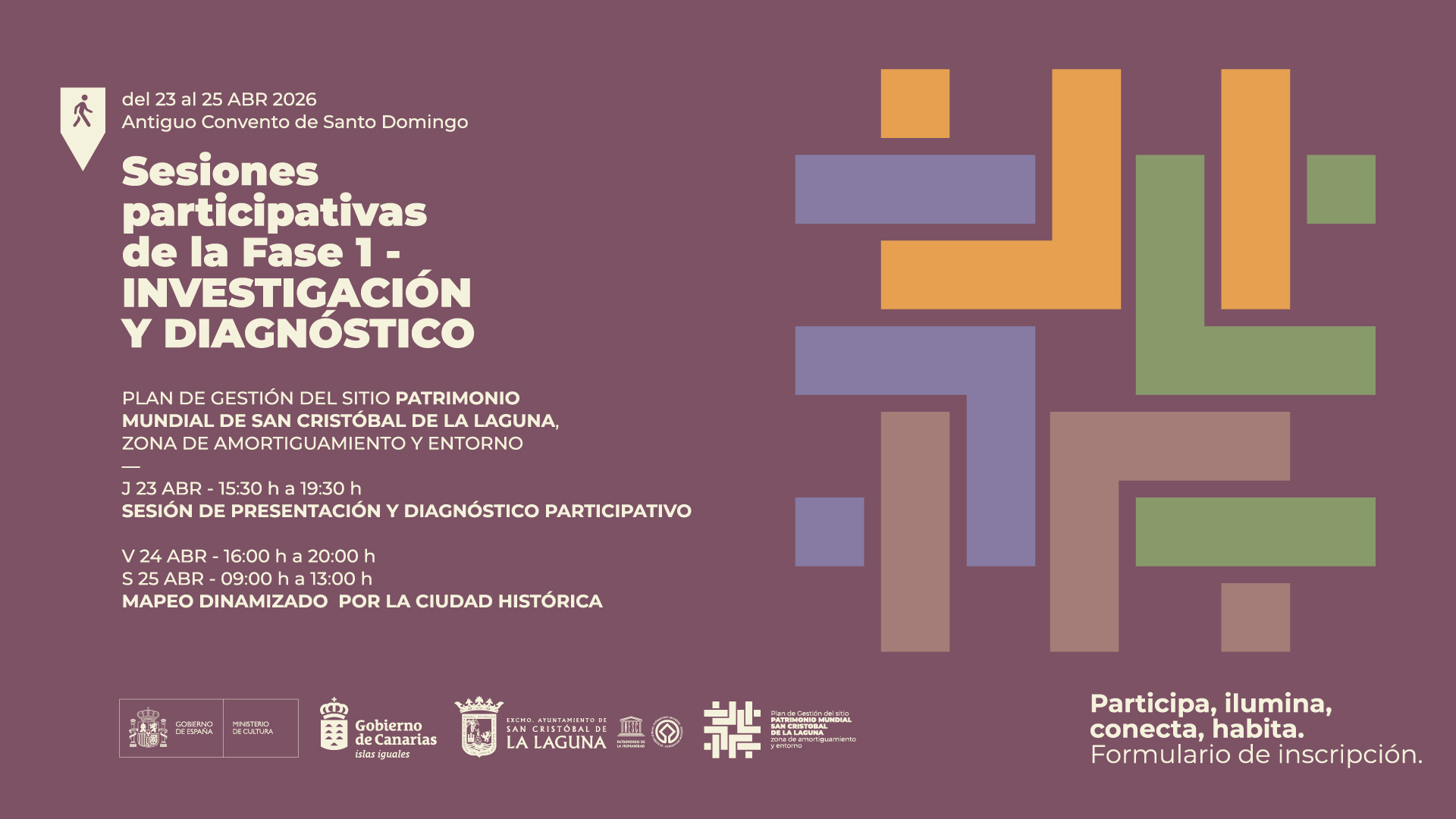
Participatory sessions and itineraries
This initial participatory phase aims to identify the real needs of the World Heritage Site, including its buffer zone and surrounding area, drawing on technical, institutional, and community expertise. It is open to all residents, as well as groups, specialized organizations, and associations related to the historic city, who have been formally invited.
The first participatory diagnostic session will take place this Thursday, April 23, from 3:30 p.m. to 9:00 p.m. at the former Santo Domingo Convent. This will be complemented by two guided tours of the city designed to facilitate participation: one on Friday, April 24, in the afternoon (from 4:00 p.m. to 8:00 p.m.), and the other on Saturday, April 25, in the morning (from 9:00 a.m. to 1:00 p.m.).
Registration for these sessions can be completed using the form available at https://docs.google.com/forms/d/e/1FAIpQLSdJiMr2WYh-W_SeLiHtF9MAfEJoMb2ShYxGdSIMFSWM31a9pA/viewform?usp=dialog or by sending an email to participalalaguna@urbanfix.es
In addition to the sessions open to the public, a specific meeting will be held for all municipal and public institution staff. Following this initial phase, the City Council will continue presenting results and holding further working sessions, maintaining a continuous feedback process and ensuring that anyone interested can participate in subsequent phases.
In these initial sessions, the teams drafting the various sections of the Management Plan will present the initial objectives and conduct a preliminary assessment with the participants. This work will include the collaborative development of a SWOT analysis, the identification of priorities, and the formulation of recommendations to guide the drafting of each document.
From the particular to the general
The Management Plan is structured into four specialized plans or sections that will allow for a comprehensive approach to the main areas that determine the conservation and urban life of the historic site.
The Strategic and Operational Plan, awarded to the joint venture Fundación Ecológica Urbana y Territorial & Cabrera Febles Arquitectos, will define the main guidelines for protecting the site, incorporating a documented management system that will allow for measuring the quality of life of the resident population and guaranteeing the preservation of La Laguna’s Outstanding Universal Value.
The Mobility and Open Space Design Plan, developed by the joint venture Buchanan-Trion, will address one of the most complex challenges for heritage cities: reconciling accessibility, livability, and sustainability with the historical identity of the urban space.
Likewise, the Lighting Plan, awarded to Intervento, will design a lighting system that is respectful of the site’s heritage character, efficient, and safe. Across all areas, the Participation and Communication Plan, contracted to Urbanfix, will ensure that citizens effectively influence the definition of the management model.
The contracting of these four sections represents a total investment of €595,490.62, financed by the La Laguna City Council and co-financed by the Ministry of Culture and the Government of the Canary Islands. This financial commitment reflects the institutional dedication to providing the city with a robust, modern instrument aligned with international standards.
Each plan will have multidisciplinary teams specializing in heritage, urban planning, mobility, lighting, anthropology, geography, and communication, allowing for the integration of complementary perspectives and guaranteeing a rigorous and up-to-date approach.
Furthermore, all the teams drafting the Management Plan, across its various sections, are already working in a coordinated manner under the operational structure defined by the Office for the Comprehensive Management of the Historic City (OGICH), which reports to the Urban Planning Department.
Continuous monitoring and adaptation
The implementation period is five years, although its effective application extends to a decade, as it includes the drafting of the documents, their phased implementation, and continuous monitoring and follow-up. Therefore, it is conceived as a living system, with indicators and the capacity to adapt to social, environmental, and economic changes.
The La Laguna Management Plan responds to a new framework of requirements from UNESCO for World Heritage cities, which must have updated instruments capable of guaranteeing effective and sustainable conservation.
However, La Laguna has decided to go beyond formal compliance and seize this opportunity to anticipate future challenges: tourism pressure, climate change, loss of identity, mobility in sensitive environments, and the need to strengthen social cohesion. With this process, the municipality positions itself as a city that protects its heritage without sacrificing innovation, livability, and the active participation of its citizens.