Specialists from various disciplines explain the historical, cartographic and cultural relevance of this 16th-century manuscript, whose facsimile reproduction has been carried out by the City Council in collaboration with the University of Coimbra
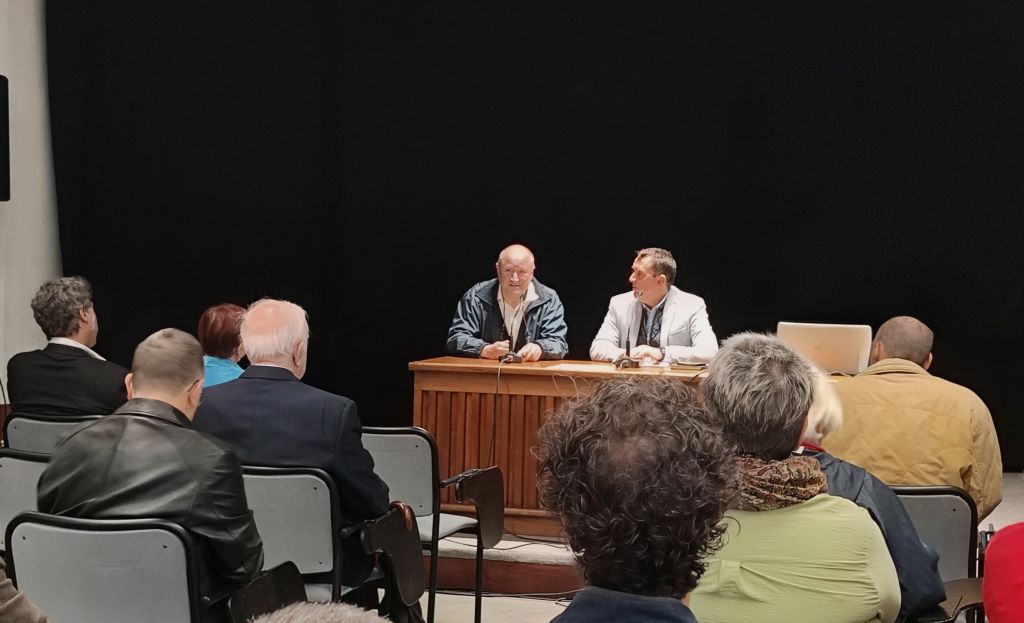
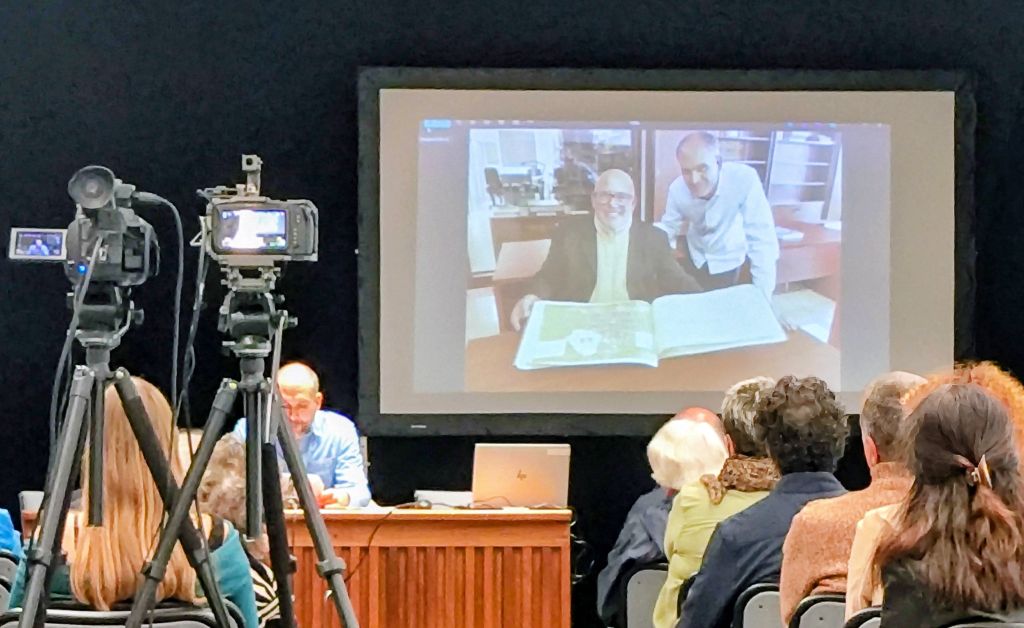
The former Santo Domingo convent in La Laguna hosted the interpretive workshops “La Laguna by Leonardo Torriani” this Wednesday. Organized by the Department of Cultural Heritage, the event brought together specialists and members of the public in this historic building to delve into the historical, scientific, and heritage significance of the “Description of the Canary Islands,” a work by the Cremonese engineer from the late 16th century. The sessions, coordinated by historian and professor Néstor Verona, took place just hours after the public presentation of a facsimile of the manuscript, further solidifying public interest in a work fundamental to understanding the urban and territorial origins of this World Heritage city.
The Councilor for Cultural Heritage, Adolfo Cordobés, inaugurated the conference alongside the Deputy Director of the Faculty of Arts at the University of Coimbra, João J. Fernandes, emphasizing that “the presentation of the facsimile has been a historic moment for La Laguna, because it allows us to symbolically recover a document that forms part of our founding memory.”
Cordobés added that “these conferences demonstrate that heritage is not a static object, but a living space for research, dialogue, and the construction of identity, and that the citizens of La Laguna are deeply committed to their history.”
The first presentation, entitled “The Canary Islands under the Sign of Torriani,” was given by anthropologist Pablo Estévez, who offered a broad overview of the political, social, and cultural context in which the aforementioned Renaissance engineer carried out his work. Estévez analyzed how the Italian artist’s perspective introduced, for the first time, a systematic description of the archipelago, combining observation, territorial analysis, and a surprising understanding of the islands’ reality. His presentation placed the work within the context of 16th-century European society and the complex reality of the islands after the conquest.
The second presentation, given by conservator and restorer Katarzyna Zych, delved into the artisanal and technical process that allowed her to reproduce Torriani’s original work with absolute fidelity. Entitled “The Reconstruction of Memory,” Zych explained the challenges of working on the recreation of a unique manuscript of enormous historical value and detailed the reproduction and documentation techniques employed. Her presentation was particularly appreciated by the audience, who were able to grasp the material and symbolic dimensions of the project undertaken by La Laguna.
Next, Professor José Luis Dólera Martínez gave the lecture “Mapping Time: The Urban Evolution of La Laguna,” in which he analyzed the map from the Torriani manuscript, the oldest surviving map of the city, and compared it with the subsequent evolution of the urban layout. Dólera showed how the city has maintained the essential elements of its founding structure and how the Torriani document is a key piece for understanding the unique urban planning that led to La Laguna being declared a World Heritage Site.
The day concluded with a presentation by Colonel and researcher Juan Tous Meliá, who spoke on “Leonardo Torriani as Seen by a Cartophile.” Tous, one of the Canary Islands’ leading experts in this field, offered a passionate and meticulous reading of the work from the perspective of historical cartography, highlighting the manuscript’s precision, technical innovation, and documentary significance. His presentation closed the program with a reflection on the importance of preserving and disseminating historical cartography as an essential part of cultural heritage.
Councilman Adolfo Cordobés praised the public’s participation and the quality of the presentations, stating that “the citizens have responded enthusiastically, demonstrating that La Laguna is a city that reflects on its history, studies it, and celebrates it.”
He also noted that these interpretive sessions are part of a broader program of activities, which will continue on May 15 with the opening of the facsimile exhibition at Casa Anchieta, reinforcing the historical link between La Laguna and Coimbra and bringing this exceptional document closer to all citizens.