



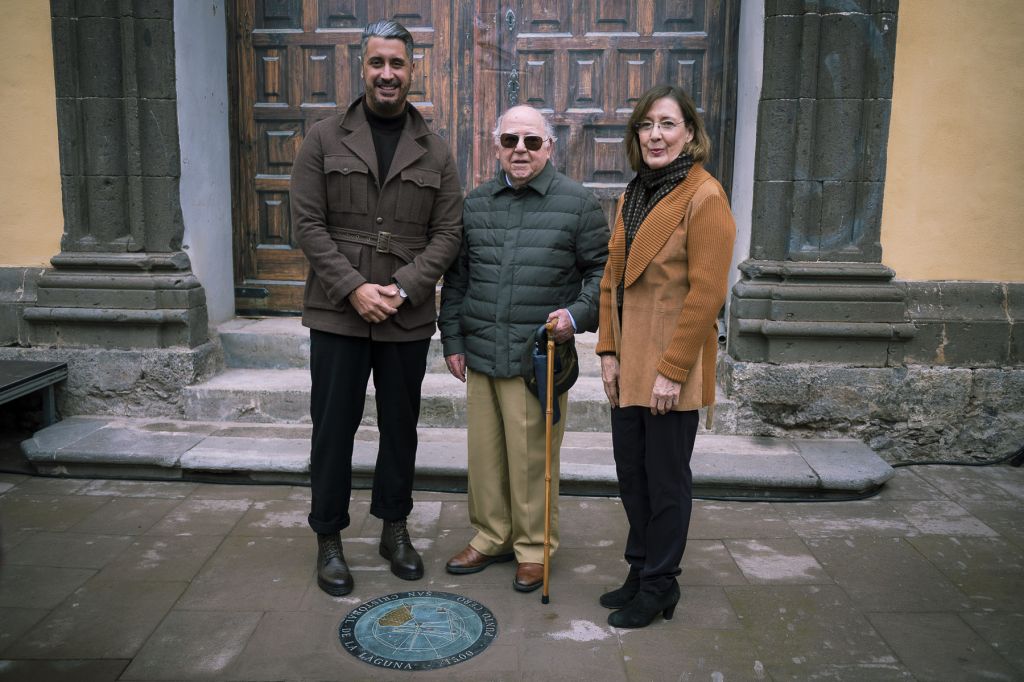
A bronze plaque measuring half a metre in diameter marks the centre of the compass rose hidden in the city’s layout for five centuries on Calle San Agustín
This new urban icon rises digitally in an audiovisual proposal that conveys La Laguna’s universal vocation as an Atlantic link between continents.
 Today, La Laguna hosted one of the main events of the 25th anniversary of its declaration as a World Heritage City with the unveiling of the plaque marking its Point Zero and the presentation of the video accompanying this innovative initiative, which reveals the compass rose that inspired the layout of the historic city, a Renaissance design that remains virtually intact to this day and forms the basis of its Outstanding Universal Value. With this double gesture, La Laguna reinforces its identity as the origin of Tenerife’s historic roads and as an urban model exported to Latin America, projecting its cultural legacy beyond its borders and reaffirming its universal vocation.
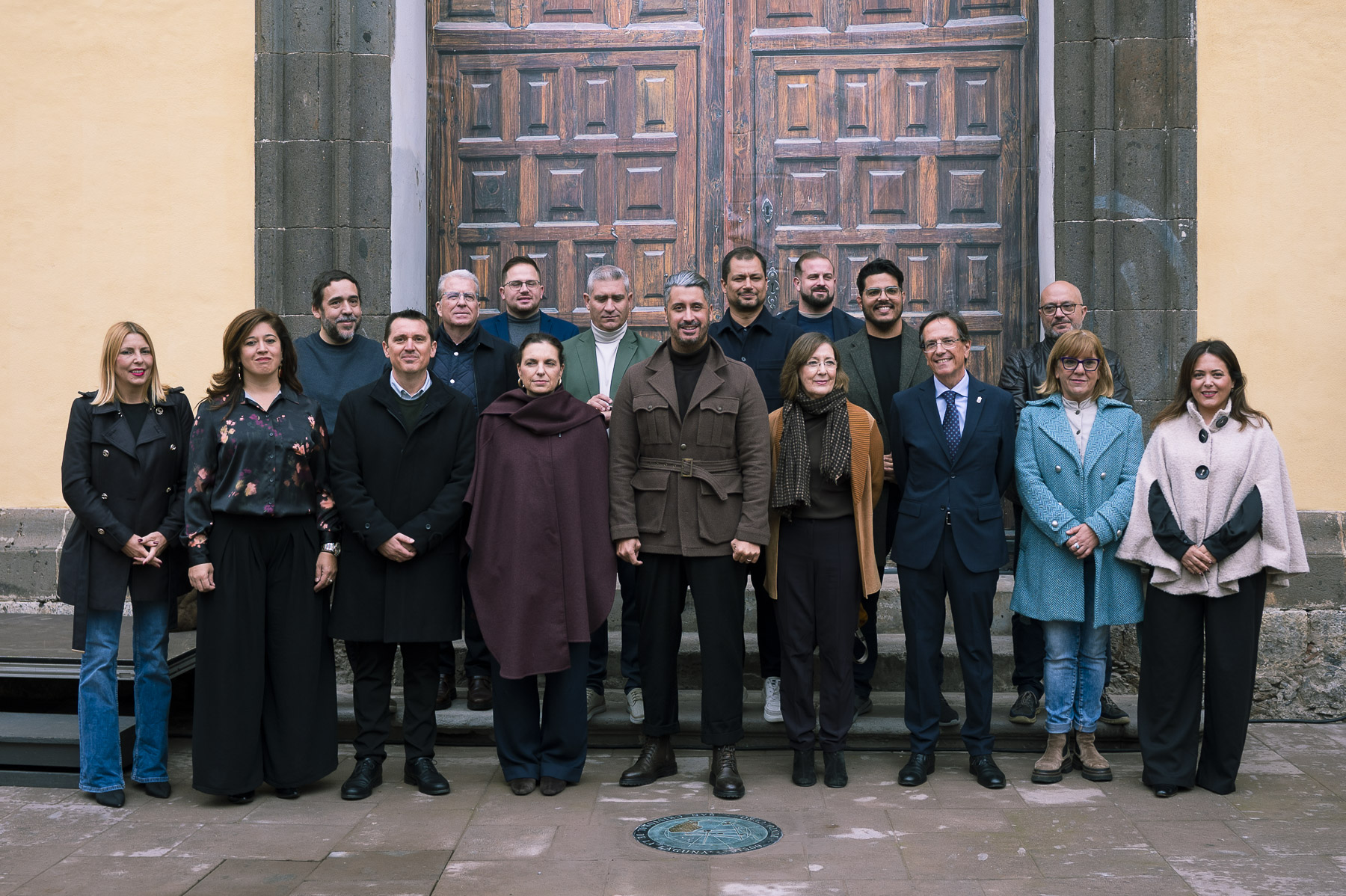
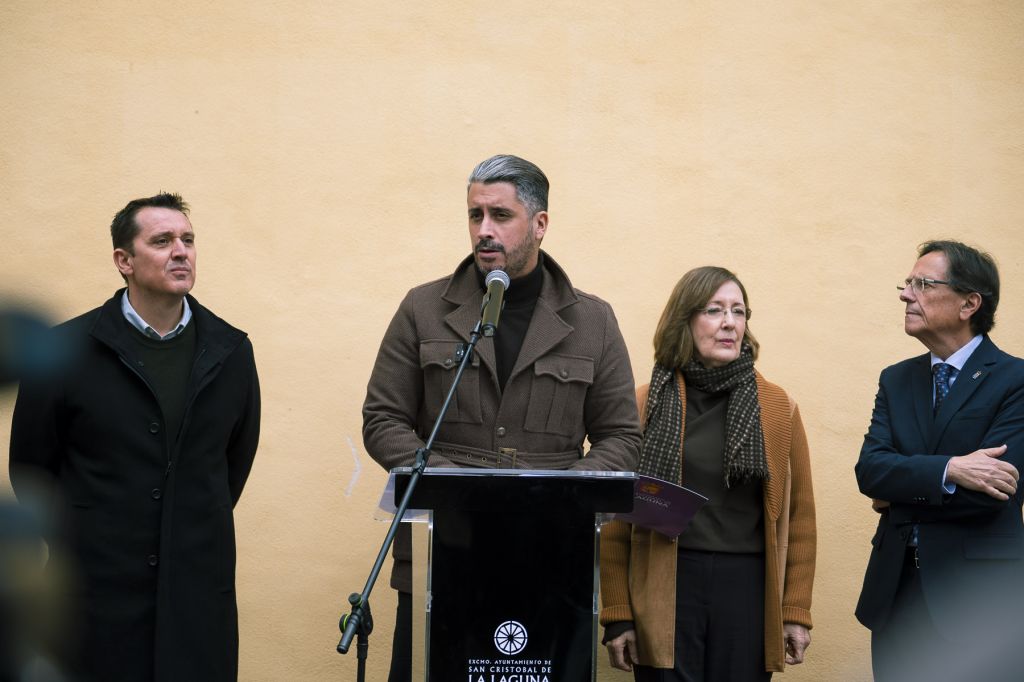
The event was attended by the Mayor of La Laguna, Luis Yeray Gutiérrez; the Councillor for Cultural Heritage of La Laguna, Adolfo Cordobés; the Director General of Cultural Innovation and Creative Industries of the Canary Islands Government, Cristóbal de la Rosa; the Island Director of Historical Heritage of the Cabildo of Tenerife, Isabel de Esteban; and the Professor of Art History at the University of La Laguna, Maisa Navarro, who explained the details of the original layout.
The Mayor of La Laguna, Luis Yeray Gutiérrez, emphasised in his speech that “this Point Zero is not just a bronze plaque, it is a symbol that reminds us that La Laguna was the origin of the roads of Tenerife and that its urban layout, without walls and ahead of its time, became a model for cities in America. Today we reaffirm that our city was born with a universal vocation and that it continues to project its identity beyond the Canary Islands”.
For his part, the Councillor for Cultural Heritage, Adolfo Cordobés, stressed that “the installation of this plaque and the presentation of the advert are tools for dissemination and civic pride. We want every resident of La Laguna and every visitor to be able to physically recognise the geometric heart of the city and understand why La Laguna is a World Heritage Site. It is a simple gesture, but one that is loaded with meaning, connecting academic theory with everyday experience.”
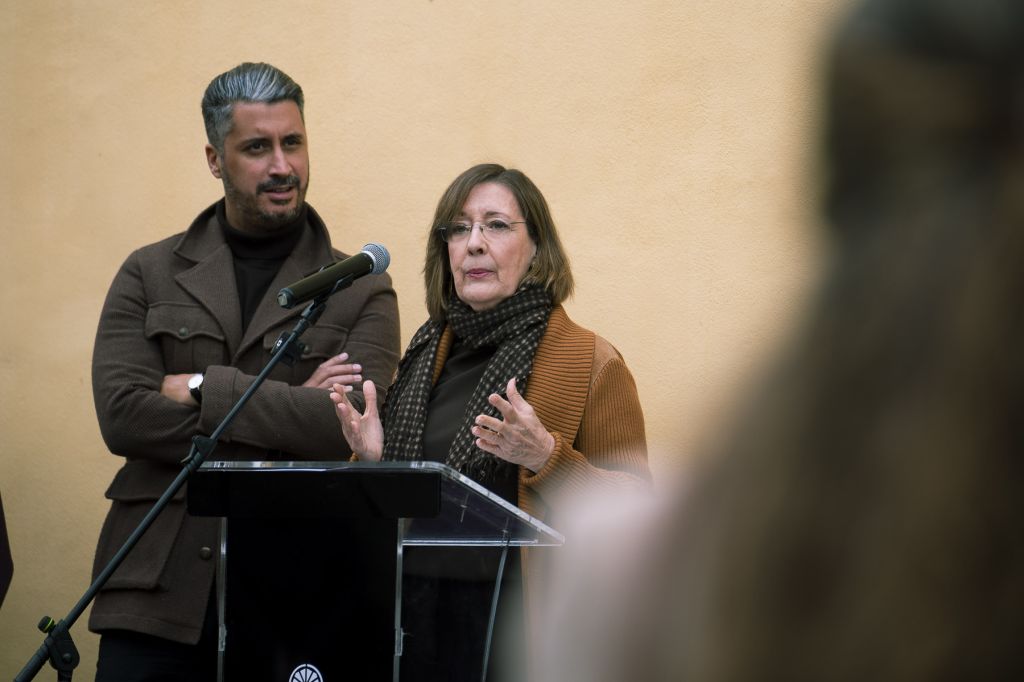
Cristóbal de la Rosa stated that “culture and identity are born from events that become symbols, and La Laguna, especially in the last 25 years, has established itself as the sole symbol of reference for the entire Canary Islands. Its openness, inherited from the Renaissance spirit and a city without walls, makes it an emblem of coexistence and hospitality. As a heritage city, it faces the challenge of preserving its legacy while keeping it alive and shared, reaffirming that its symbol of openness will continue to guide the debate on how to conserve and project heritage with the same open and hospitable spirit that characterises the Canary Islanders.”
Isabel de Esteban also pointed out that, “at the Island’s Historical Heritage Department, we believe that protecting, interpreting and promoting our heritage is a shared responsibility. For this reason, the Cabildo has allocated an investment of half a million euros to support and enable the events marking the 25th anniversary of La Laguna’s declaration as a World Heritage City. This contribution reflects our firm commitment to promoting projects for the dissemination, research and interpretation of heritage that bring our history closer to the public.”
Physical and digital image
The Zero Point plaque, half a metre in diameter and made of bronze by Fundiciones Bronzo, embodies the compass rose that inspired the city’s founding layout at the end of the 15th century. Its installation turns the concept into a tangible and accessible landmark, allowing residents and visitors to place their feet on the geometric heart of La Laguna, in the style of Madrid’s Kilometre Zero. This simple and photogenic feature is set to become an urban and heritage icon, with great potential for tourism and cultural campaigns, and for generating spontaneous interaction on social media.
Following the unveiling of the plaque, located on Calle San Agustín with Núñez de la Peña, a short film was projected onto a large screen to reinforce this concept audiovisually. Produced by Adrián González Paredes with the support of the prestigious international creative studio Lowked Studio, which specialises in animation, post-production and high-impact digital experiences, this short video translates the theory of the compass rose and the historical centrality of the city into images.
The audiovisual narrative depicts the encounter between two generations who suddenly discover the history hidden beneath their feet. The compass rose emerges from the ground, rises towards the sky and projects beams of light that connect continents, symbolising La Laguna’s role as an Atlantic link between Europe and Latin America.
All this is achieved through conceptual originality, technical innovation, educational value, emotional impact and international reach. Its balance between historical rigour, visual creativity and the ability to move viewers makes it an innovative piece in the field of local heritage communication.
Adrián González Paredes is responsible for directing, editing and post-production, with Gabriel García Fernández-Valdés as director of photography and Manuel Baro Pereira as sound designer. Produced by Agencia La Cosecha and starring Fernando Romero Amich and Indira Hernández Hernández, the commercial featured production assistants Estefanía González Cruz and Alex Chávez Perdomo, as well as Droneframescanarias for the use of drones and Lowked Studio for 3D design.
An idea in two formats: tangible and intangible
The link between the plaque and the video is direct. Both pieces function as emotional devices, making the concept visible in order to trigger a more comprehensive individual search for the city’s Outstanding Universal Value. The plaque fixes the geometric centre of La Laguna in the public space, while the advert expands it into the collective imagination, multiplying its reach through emotion and aesthetics. This dual action reinforces the heritage narrative and offers an aesthetic and cultural interpretation that enriches the experience of those who visit the city.
 The initiative is part of a broader strategy by the Department of Cultural Heritage to highlight the reality of a city that is not an open-air museum, but a living space that is already working to incorporate sustainability and innovation into its management, with new planning tools and a participatory programme that will be developed over the coming years.
La Laguna Punto Cero is the result of a process of analysis that began 25 years ago as the only World Heritage City in the Canary Islands. It is the first visible action of a comprehensive plan that seeks to reconcile the protection of its Outstanding Universal Value with the contemporary needs of its residents.
The intended uses of the plaque and the spot include institutional events, promotional campaigns, educational and heritage programmes, and cultural activities. Both actions are not only cultural gestures, but symbols of identity, pride and international projection.
With Punto Cero, La Laguna reaffirms its universal vocation and its role as a lively, inhabited and constantly evolving city, capable of connecting island paths and Atlantic routes, and inspiring those who visit it to protect and value its heritage.
This initiative is part of the programme commemorating the 25th anniversary of La Laguna’s designation as a UNESCO World Heritage Site, which is financially supported by the Government of the Canary Islands and the Tenerife Island Council.